 11 Days
From Marrakech
11-Day Marrakech to Casablanca via Merzouga
A grand south-to-north loop finishing at the Casablanca gateway.
from€899 /person
View tour

Chefchaouen, both great ergs and the Atlantic on a sweeping route.
Chefchaouen, both great ergs and the Atlantic on a sweeping route. This 11-day private journey begins in Tangier and is designed to give you the best of the route without the rush — with hand-picked accommodation, an English-speaking driver-guide and plenty of freedom to stop wherever catches your eye.
Highlights include chefchaouen & fez, erg chebbi & zagora, essaouira coast. Like every Edita itinerary it is fully flexible: we can lengthen or shorten it, upgrade your riads and desert camp, or change the start and finish cities to fit your flights.
Keep exploring: Morocco Tours from Tangier · all 39 Morocco tours · How Many Days Do You Need in Morocco?
We collect you in Tangier — from the airport, the port or the Tarifa ferry — and set off south into the green folds of the Rif Mountains. Our destination is Chefchaouen, the famous 'blue pearl' whose entire medina is washed in every conceivable shade of blue, from powder and sky to deep indigo. The drive itself is beautiful, climbing through cork-oak forests and hillside villages. On arrival you have the afternoon free to lose yourself in the tangle of blue lanes, where cats doze on doorsteps, artisans sell woven blankets and hand-thrown pottery, and every corner is a photograph waiting to happen. Climb to the Spanish Mosque viewpoint for sunset over the whole blue town, then enjoy dinner in a small square before your first mountain night in Morocco.
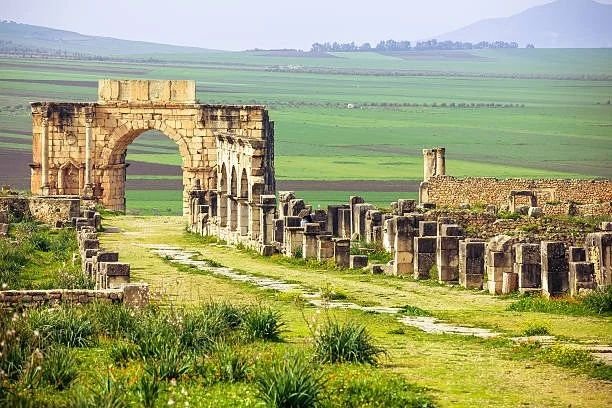
Leaving the blue mountains behind, we drive south across rolling farmland toward the imperial heartland of Morocco, breaking the journey with two of the country's great historic sites. First we stop at Volubilis, the best-preserved Roman ruins in Morocco, where standing arches, columns and remarkably intact floor mosaics of Bacchus, Orpheus and the seasons spread across a hillside of olive groves. Nearby lies Moulay Idriss, the whitewashed holy town cascading over two hills. We continue to Meknes, the 17th-century capital of Sultan Moulay Ismail, to admire the monumental Bab Mansour gate, the vast granaries and royal stables. By late afternoon we reach Fez and check in to a riad within the old medina, leaving the evening free to rest before tomorrow's full day exploring the labyrinthine heart of the city.
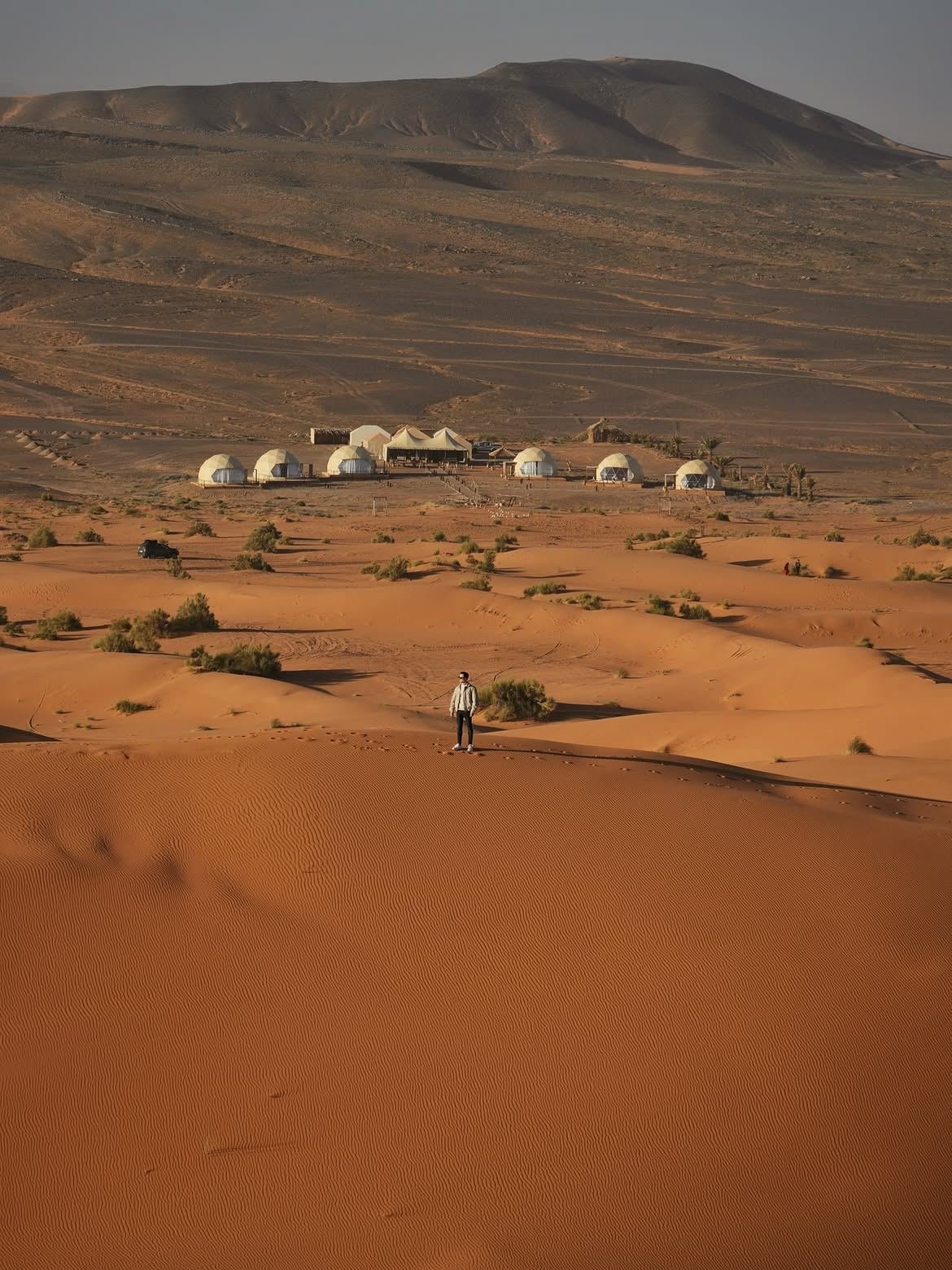
One of the great road days in Morocco, carrying us from the medieval north to the edge of the Sahara across ever-changing landscapes. We climb into the Middle Atlas to Ifrane, a curiously alpine town of pitched roofs and gardens nicknamed 'little Switzerland', then into the cedar forests around Azrou where troops of wild Barbary macaques gather at the roadside. Beyond Midelt the mountains give way to the dramatic gorges and endless palm groves of the Ziz Valley, a ribbon of green threading through bare desert rock. By late afternoon the first dunes of Erg Chebbi appear on the horizon. We swap the vehicle for camels and ride out over the sand as the light turns molten, reaching a Berber camp for tea, dinner and drumming beneath a blaze of stars.
A full, unhurried day in the heart of the Sahara at Erg Chebbi, Morocco's most spectacular sea of dunes, some rising 150 metres from the plain. You can begin by climbing a high ridge for sunrise, when the sand shifts through pink, gold and deep orange. Later we explore deeper by 4x4: a visit to the village of Khamlia to hear the hypnotic Gnawa music of its Saharan community, calls on nomad families who still live by their herds, stops at desert wells and fossil-strewn flats, and a look at the old routes once walked by camel caravans. There is time to rest in the shade, try sandboarding, or simply sit with the immense silence. As evening returns you ride out once more to camp for a second magical night under the stars.
Leaving the great dunes behind, we set off west along the fabled Road of a Thousand Kasbahs. First we pause in Rissani, the market town built on the ruins of Sijilmassa, once a wealthy caravan capital at the gateway to the Sahara, and pass through Erfoud, centre of the date and fossil trade. The route then climbs into the Atlas foothills to the magnificent Todra Gorge, where sheer rose-coloured limestone walls soar 300 metres and close to just a few metres apart above a clear river — we walk a stretch on foot, dwarfed by the cliffs. Continuing through Tinghir's palm oasis and a string of earthen ksour, we reach the Dades Valley in the late afternoon, checking in near the dramatic gorge with its famous switchback road for the night.
Today we complete the drive from the valleys to the great dunes, through some of the south's finest scenery. We begin at the Todra Gorge, where we walk beneath sheer limestone cliffs that rise 300 metres and narrow to a few metres apart above a cold, clear river — a favourite of rock climbers and an unforgettable place to stand. Continuing through the palm oasis of Tinghir and the date-trading town of Erfoud, the landscape opens into flat, stony hammada and the first ridges of orange sand appear ahead. Reaching Merzouga in the afternoon, we pause at your kasbah before the day's highlight: as the sun lowers, we ride camels in caravan out over the crest of Erg Chebbi to a desert camp, arriving for dinner, Berber music and a night under the stars.
A day to slow down and soak up the Draa Valley, the great palm-fringed oasis that made Zagora a crossroads of the caravan trade. We explore at an easy pace, visiting old mud-brick kasbahs and ksour, walking among the date palms, and calling in at Zagora's lively market where goods from across the south change hands. There may be time to see the restored Tamegroute, with its ancient library of illuminated manuscripts and its distinctive green pottery, or simply to rest through the heat of the afternoon. As the day cools, we mount camels and ride out into the dunes, the animals padding silently over the sand as the light softens to amber. At camp we gather for a tagine dinner and an evening of Berber drumming beneath a brilliant canopy of stars.
This morning we begin the return north, following the Draa Valley back up its ribbon of palm groves and kasbahs toward the mountains. We retrace the route through Agdz, beneath the crumbling Kasbah of Tamnougalt, and on to Ouarzazate, with a chance to stop again at Ait Ben Haddou if you wish to see the great ksar in different light. From here the road climbs into the High Atlas for the crossing of the Tizi n'Tichka, the highest major pass in the country, twisting up past Berber villages, market towns and viewpoints that open onto range after range of bare mountains. We pause for lunch and photographs along the way. Descending the northern side to the Haouz plain, we arrive back in Marrakech in the afternoon, with the evening free to relax.
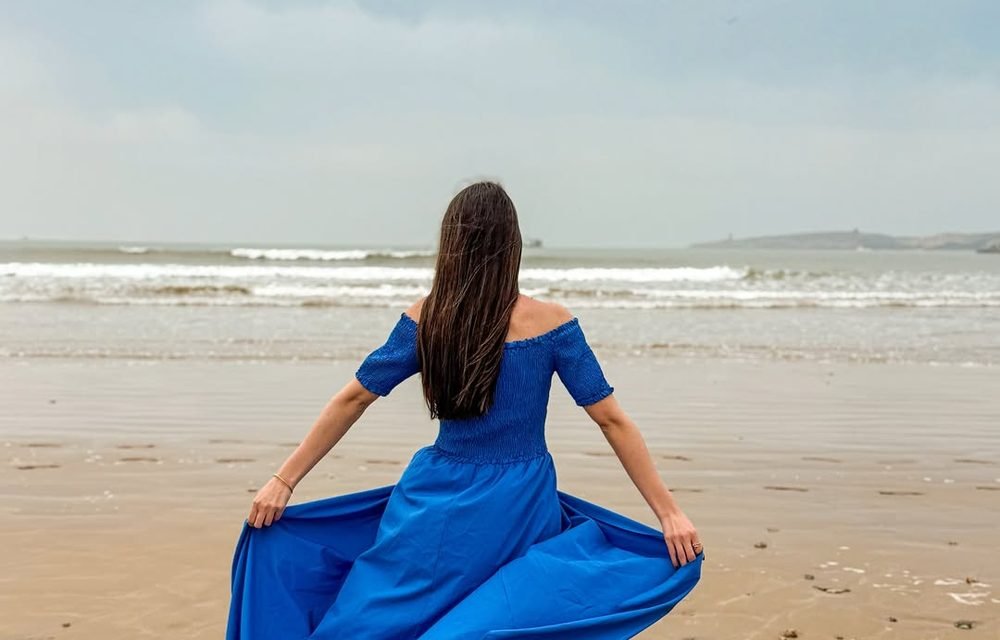
Today we swap the mountains for the ocean, driving west across the plains to the breezy Atlantic port of Essaouira. Along the way we pass through classic argan country and stop at a women's cooperative, where you can watch the nut being cracked and pressed by hand into the golden oil used in Moroccan cooking and cosmetics — and often spot goats perched improbably in the argan trees. Essaouira itself is a delight: a walled 18th-century town of whitewashed houses and blue shutters, its ramparts and sea-battered Skala bastions open to the wind that has made it a windsurfing legend. We explore the lively fishing harbour where the day's catch is landed and grilled, wander the relaxed medina of art galleries and workshops, and stroll the wide sweep of beach before dinner.
There is time this morning to enjoy Essaouira at its gentlest, before the afternoon wind picks up. You might take a final walk along the broad Atlantic beach, watch the blue sardine boats unload at the harbour, or browse the artisan medina for the thuya-wood carvings and paintings for which the town is famous — it is one of Morocco's most creative and laid-back places. When you are ready we drive back east through the argan groves and open countryside to Marrakech, roughly a three-hour journey with a stop or two along the way. Arriving in the late afternoon, you have the evening free once more in the Red City — perhaps a return to Jemaa el-Fnaa for dinner, or a quiet rooftop where the Koutoubia glows against the darkening sky.
Your Moroccan journey comes to an end today. After a relaxed breakfast and, if time allows, a final wander through the souks for any last souvenirs — a lantern, a rug, a bag of spices — your driver-guide collects you from your riad and transfers you to Marrakech Menara airport in good time for your flight. If your departure is later in the day, we are happy to suggest how to spend the remaining hours, whether that is a last mint tea on a rooftop overlooking the medina, a visit to a garden or museum, or simply resting before you travel. We say goodbye with a warm farewell — b'slama — and our hope that the dunes, mountains and medinas of the past days have given you memories and friendships to carry home.
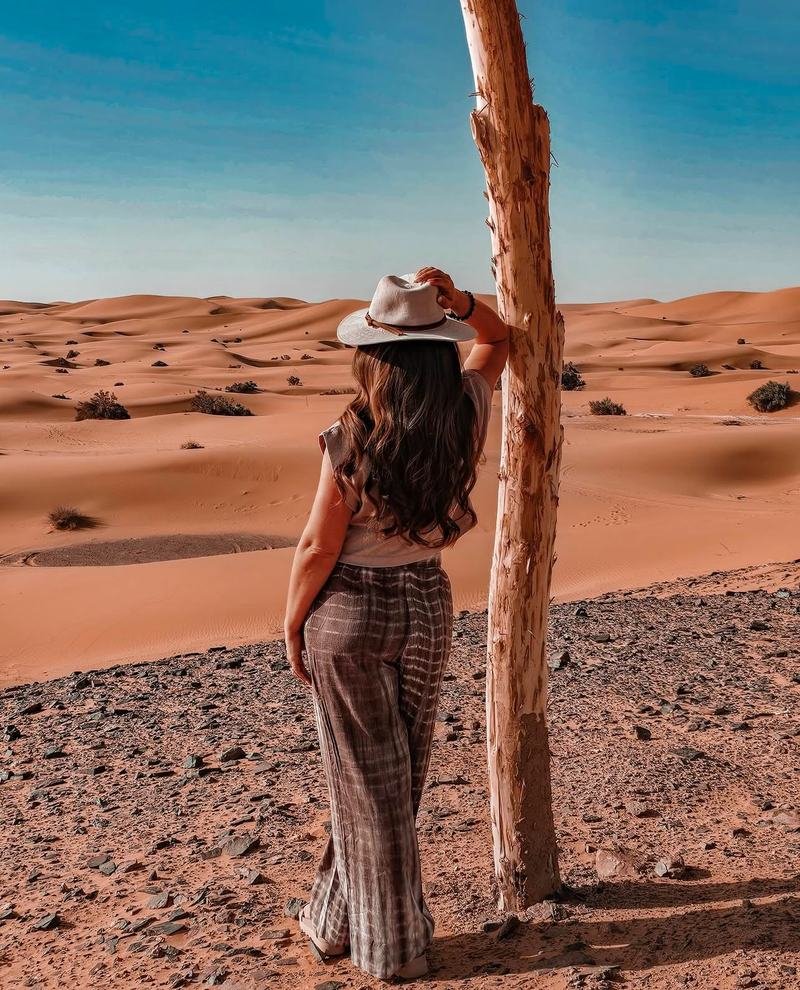
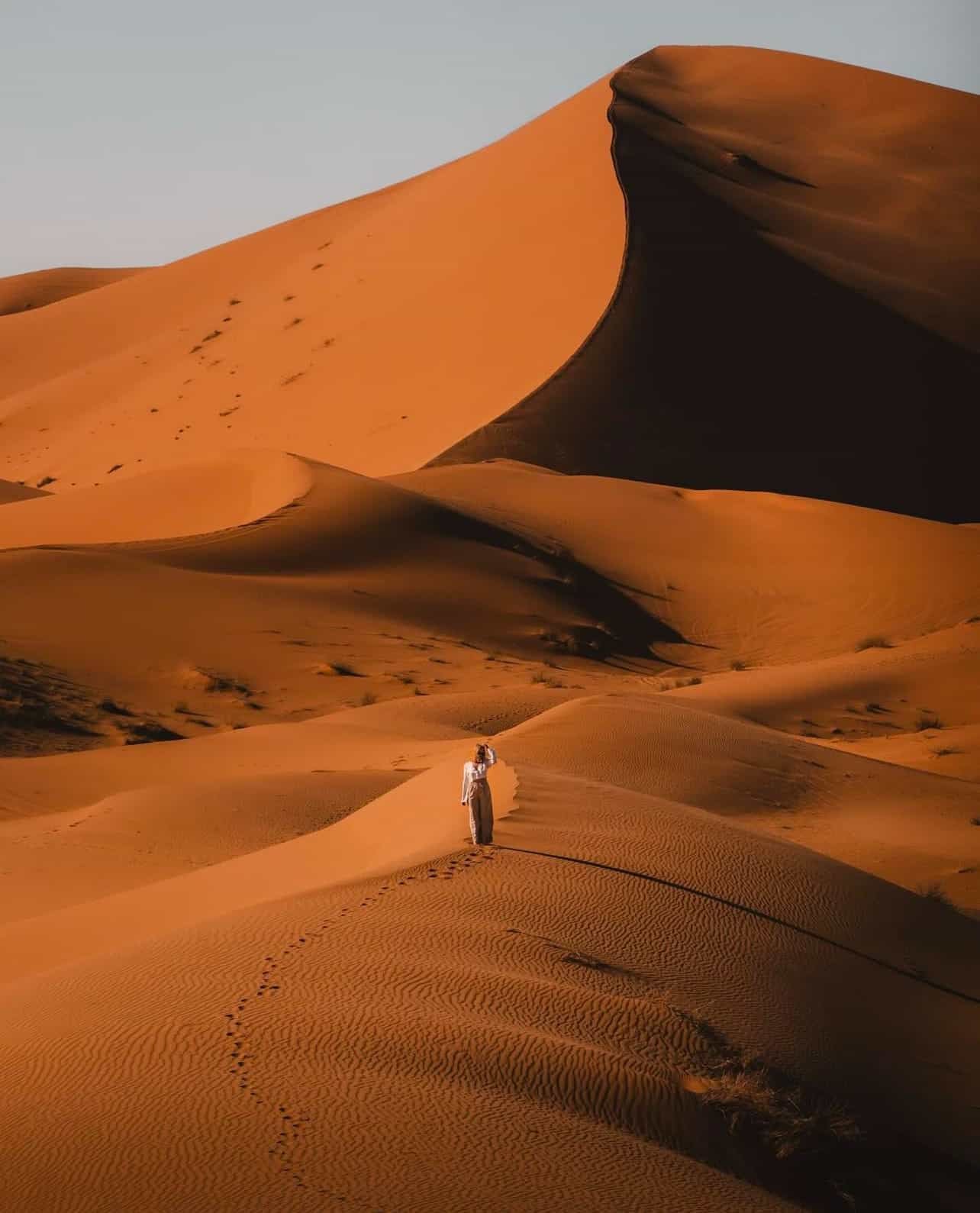
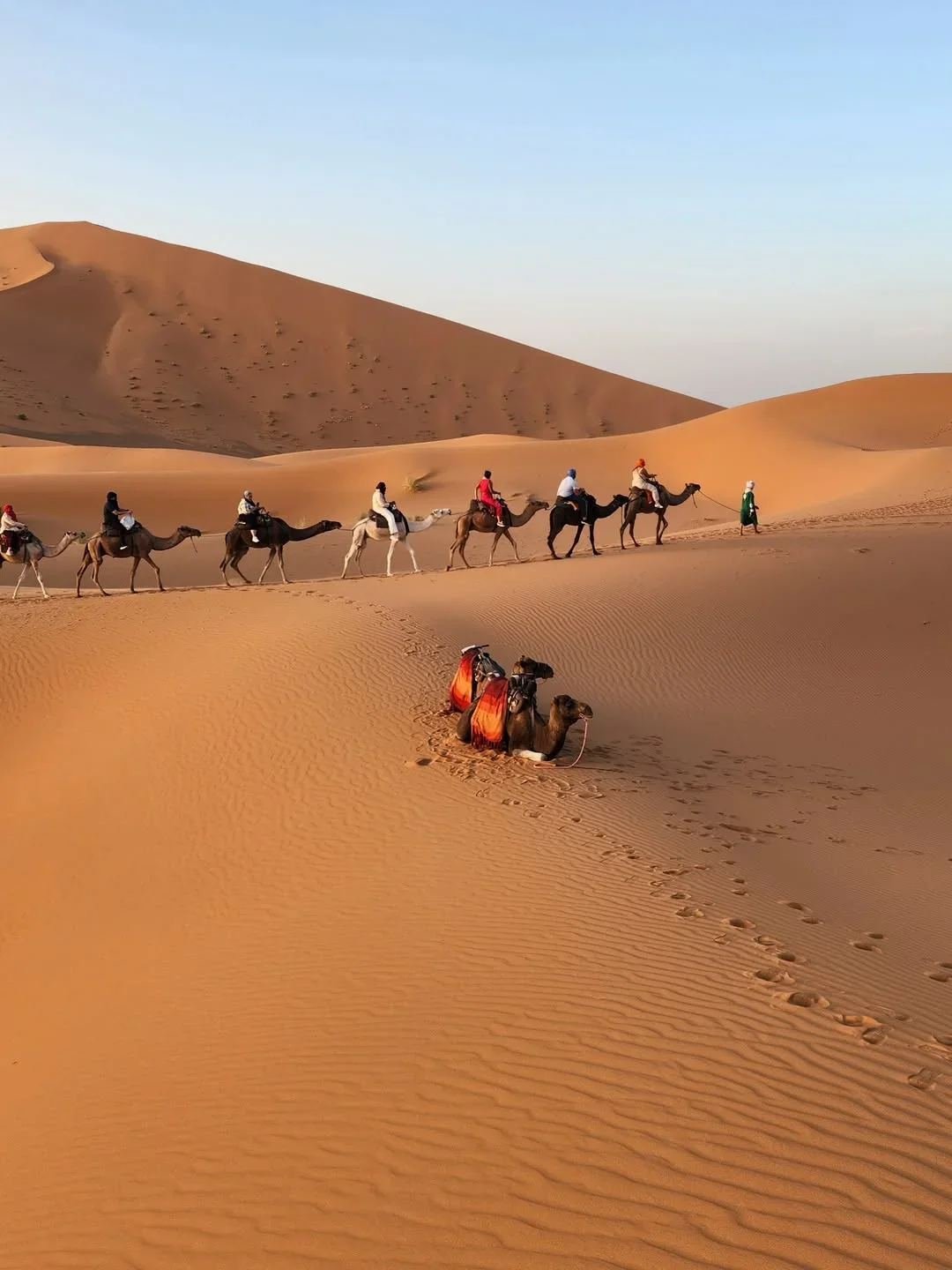

“Impeccably organised and completely private. We changed the plan twice and Edita made it effortless. The Sahara sunrise was unforgettable.”
“From Fez to Marrakech we saw a side of Morocco most tourists miss. Comfortable 4x4, wonderful riads and a driver who knew every hidden spot.”
11 Days
A grand south-to-north loop finishing at the Casablanca gateway.
 10 Days
The complete north-and-desert circuit from Fez to Marrakech.
 10 Days
Cities, the Sahara and the Atlantic on a grand loop from Casablanca.